Pièce 5 onces d'argent L'émergence d'un pays | Premier siècle de la Confédération | 2021 Monnaie royale canadienne

Related products
Driving progress: Coin #1 is an art nouveau-styled glimpse of Canada's railway era. Order today!
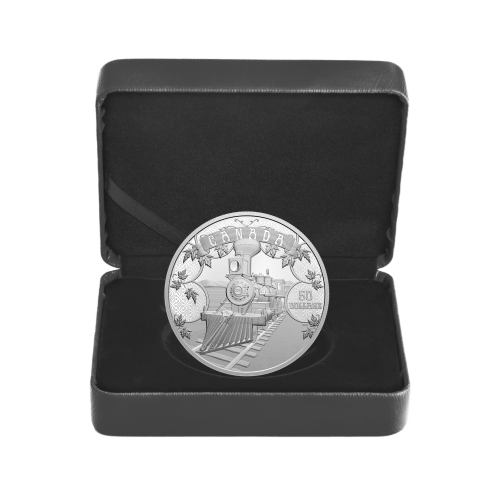
It was the era that laid the groundwork for a modern Canada. With its art nouveau look, the first coin of a three-part First 100 Years of Confederation series travels back in time for a glimpse of Canada between 1867 and 1914. These were the years in which the locomotive, like the 4-4-0 one featured on this coin, was the engine of change and the driver of progress. The completion of the transcontinental railway in 1885 ushered in a season of unprecedented growth for an emerging country, and by 1914, these ribbons of steel were wrapped around almost every aspect of life in Canada.
An outstanding start to a new series that fuses art, history and industry. Order your coin today!
Special features:
- IT'S HISTORY ON THE MOVE! This is Coin #1 in an exciting three-coin series that fuses art, history, and industry! It's the story of Canada's first 100 years (1867 to 1967), viewed through the lens of art and represented by a mode of transportation that defined the era.
- ART NOUVEAU STYLE! As you view each coin, let the art style guide you in this journey through time! Each design is presented in a different art style that channels the spirit of the era it represents, beginning with art nouveau.
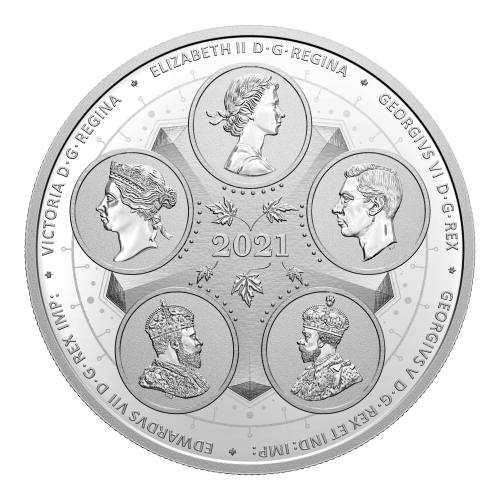
- FIVE EFFIGIES ON ONE COIN! The multi-effigy obverse features the effigies of five monarchs who served as Canada's constitutional head of state between 1867 and 1967, and whose combined reigns span a century of change. Each effigy is accompanied by a Latin inscription stating the monarch's name and royal title, as seen on some of the Royal Canadian MInt's most historic coins.
- D.G. – Dei Gratia, "By the Grace of God"
- REGINA – "Queen"
- REX – "King"
- IMP – "Emperor"
- IMP:IND – "Emperor of India"
- MADE FOR YOU! Collectors, this series is for you. Each coin in this series offers you captivating art and a fascinating story. And the effigies on the obverse don't just represent Canadian history; they represent a hobby and a century's worth of Canadian coin history — one effigy even predates Confederation!
- A RARE TREASURE! Be one of the privileged few to own this 99.99% pure silver coin — mintage is limited to just 1,250 worldwide.
- INCLUDES SERIALIZED CERTIFICATE! The Royal Canadian Mint certifies all of its collector coins.
Design:
Designed by Canadian artist Glen Green, the coin's reverse highlights the importance of railways in Canadian history and the role they played in the expansion of Confederation after 1867. Art nouveau design elements surround the depiction of Engine No. 374, the 4-4-0 locomotive that hauled the first passenger train along the transcontinental railway that linked eastern and western Canada. The obverse combines five of the effigies that have appeared on Canadian coins since 1867 (clockwise, from top): the first effigy of Her Majesty Queen Elizabeth II by Mary Gillick, with the Latin inscription "ELIZABETH II D·G·REGINA"; the effigy of King George VI by T. H. Paget, with the inscription "GEORGIVS VI D·G·REX"; the effigy of King George V by Sir E. B. Mackennal, with the inscription "GEORGIVS V D·G·REX ET IND: IMP:"; the effigy of King Edward VII by G. W. De Saulles, with the inscription "EDWARDVS VII D·G·REX IMP:"; and the effigy of Queen Victoria by L. C. Wyon, with the inscription "VICTORIA D·G·REGINA".
Did you know?
- A crucial link between the east and west, Canada's first transcontinental railway was completed in 1885. The last spike was driven on November 7, 1885, in Craigellachie, British Columbia, and the first passenger train to arrive in Port Moody, B.C. was pulled by the 4-4-0 type locomotive featured on this coin: CPR Engine No. 374. The historic steam engine was one of eight Canadian Pacific locomotives that were designed and built in Montreal.
- More than just transportation, railways drove innovation in Canada and helped launch other industries. Telegraph lines erected along the transcontinental railway offered Canadians a more modern method of communication, while railway cars transported goods and people to cities, communities and industries along the line. Railway companies also operated steamships on the Great Lakes and on both coasts, and the grand hotels they built (and advertised abroad) gave a big boost to Canada's hotel and tourism trade.
- Art nouveau was "en vogue" from 1890 until the start of the First World War. A highly ornamental art style, it drew inspiration from organic forms found in nature. Its flowing lines and "whiplash" curves helped pave the way for a more linear successor, art deco.
Packaging:
The coin is individually encapsulated and presented in a Royal Canadian Mint-branded clamshell with a black beauty box.
Order today!
