Pièce 1/10 once d'or Affaires favorables 10 Yuan 1997 | Monnaie chinoise

Related products
These 1/10 oz Yuan coins offer the advantages of holding 999 pure gold along with the collectible value of these limited coins that are becoming scarcer with time.
COIN HIGHLIGHTS
- Ships individually in a protective plastic sleeve
- Consisting of 1/10 oz of 999 Fine Gold
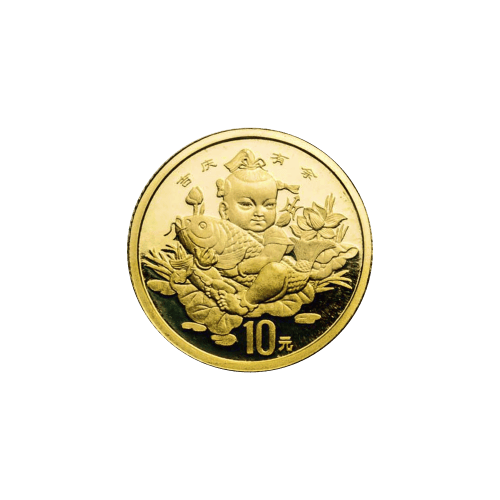
- Obverse: Features the engraving of a child holding a carp amidst native Chinese lotus flowers along with the legal tender value of the coin
- Reverse: Features the engraving of the Tiananmen Square along with the year of issue
The gold coin features a child holding a carp. The figure of the fish symbolizes wealth in Chinese culture, the word for fish and abundance are pronounced the same in their language (鱼, which is read as “yu”). The fish also symbolizes harmony, fertility, and matrimonial success in that culture. In Buddhism, the fish is one of the auspicious signs of Buddha’s Footprints and represents freedom from all restraints.
The Chinese carp is a very important fish in their culture, it brings all the symbolism of the fish, as well as some unique traits and values exclusive to that species. The scales and whiskers found on carps resemble that of the dragon (another important figure of the Chinese culture), and for that reason, they believe carps represent strength and perseverance.
ABOUT THE CHINESE MINT
Established in Shanghai in 1920 and operated by the People’s Bank of China, the Central Mint of China has become one of the world’s most popular silver and gold bullion coin producers. The Chinese mint is well-known for its high purity standards for precious metals, anti-counterfeiting properties, and innovative numismatic techniques. The Central Mint of China is recognized for its annual release of the prestigious Panda series, which features the playful Chinese animals in unique situations.
