Pièce 1 once d'or à 99999 Ruée vers l'or du Klondike 2021 | Monnaie royale canadienne
Related products
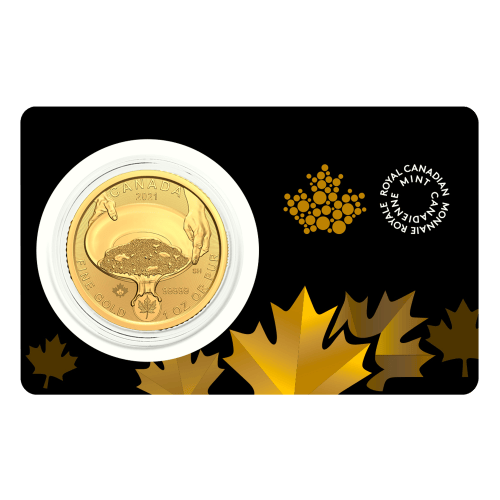
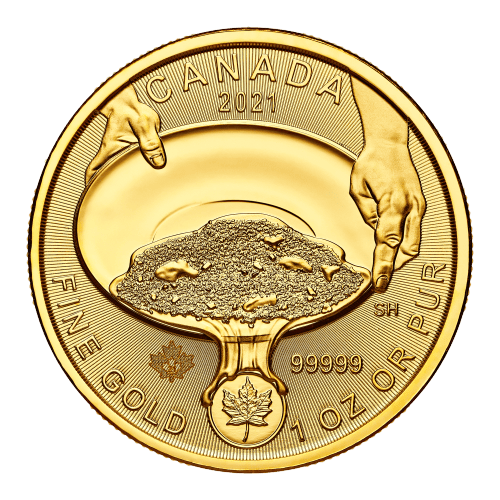
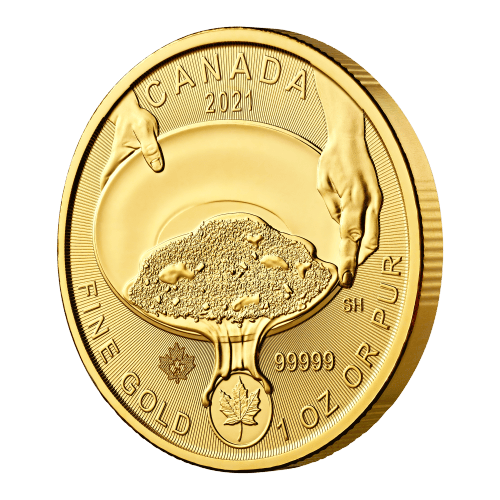
“Gold!” Imagine yourself standing in a stream, panning for gold and striking it rich — this was the golden promise that briefly lured more than 30,000 fortune seekers to Canada’s North, and it forever changed the land, its people and their traditional ways of living in a manner that continues to be felt.
COIN HIGHLIGHTS
- The FIRST coin in the new Klondike Gold Rush series in 1-ounce 99.999% pure gold
- Rendered in exquisite detail by Royal Canadian Mint engravers
- Crafted in the Royal Canadian Mint’s exacting standard of 99.999% pure gold, the highest standard of pure gold available in the world
- Features a micro-engraved maple leaf laser mark in the coin’s field. In the centre of the mark, visible under magnification, is the numeral “21”, denoting the coin’s year of issue
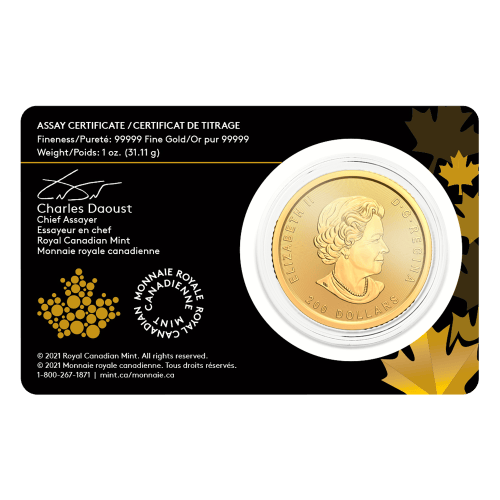
- Unique credit-card sized packaging ideal for easy handling and storing
- Signed by the RCM’s Chief Assayer, the assay certificate on the back of the card certifies the authenticity and purity of the coin
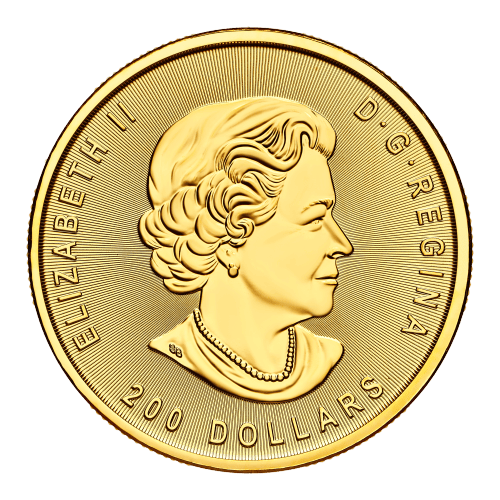
- Highest face value ($200 CAN) of any legal tender 1 oz. gold bullion coin
The world-famous Klondike Gold Rush (1896-1899) is an important chapter in Canada’s history, and this year (2021) marks the 125th anniversary of the discovery that started it all. In August 1896, Keish (Skookum Jim Mason) and his nephew Kàa Goox (Dawson Charlie) sought out and found Shaaw Tlàa (Kate Carmack), and her husband, George Carmack, before the group made the famous find that captured the world’s attention.
After the first gold pieces were found in August 1896 at Rabbit (Bonanza) Creek, the initial rush of prospectors turned into a stampede the following year. The ensuing boom days spurred Yukon’s entry into Confederation, and Canada’s development as one of the world’s leading gold producers, but the Klondike Gold Rush also had a devastating impact on local Indigenous communities. Gold rushers not only displaced these communities, but also introduced policies that fundamentally undermined their traditional ways of life—a legacy those communities still grapple with today.
The Klondike Gold Rush is often viewed as a great frontier adventure but its legacy is more complex. This was no mere rush for riches – it was a critical moment that transformed those who lived it, and changed our nation forever.
ABOUT THE ROYAL CANADIAN MINT
The Royal Canadian Mint is known as one of the most reputable mints in the world. The Ottawa Branch of the Royal Mint opened in 1908 and was renamed The Royal Canadian Mint in 1931 when control was transferred to the Canadian government. The Royal Canadian Mint is renowned for producing some of the highest quality and purity of gold and silver bullion coins and bars in the world. Their high standards for excellence and quality allowed them to be the first refinery to manufacture 9999 fine gold bullion coins in 1982, as well as the first to reach 99999 fine gold purity in 1999.
