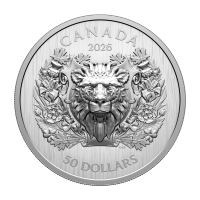
2026 Heraldic Lion Proof Silver Coin | Royal Canadian Mint
Related products
Another Canadian heraldic animal—this time, the lion—is reimagined in Extraordinarily High Relief.
You won’t find a lion in the wilds of Canada, but the noble king of beasts holds a lofty place in Canadian heraldry. Displayed on both the crest and shield of the Coat of Arms of Canada, and as one of its supporters, the heraldic lion symbolizes both Canada’s sovereignty and our historic ties to the United Kingdom, while also embodying the virtues of bravery, courage and strength.
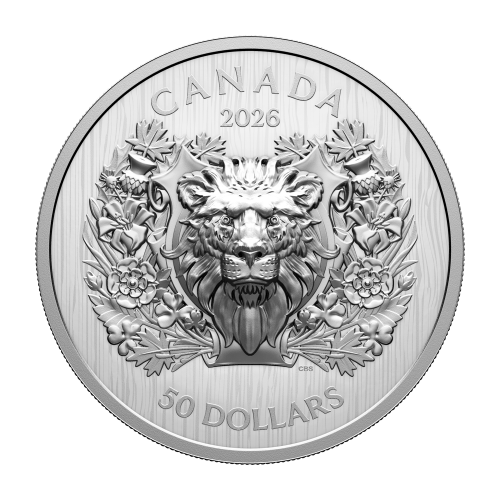
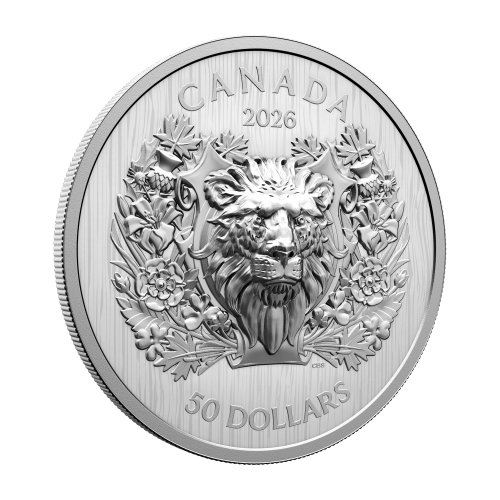
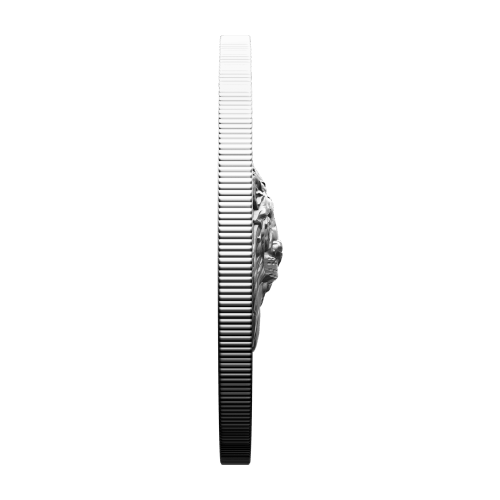
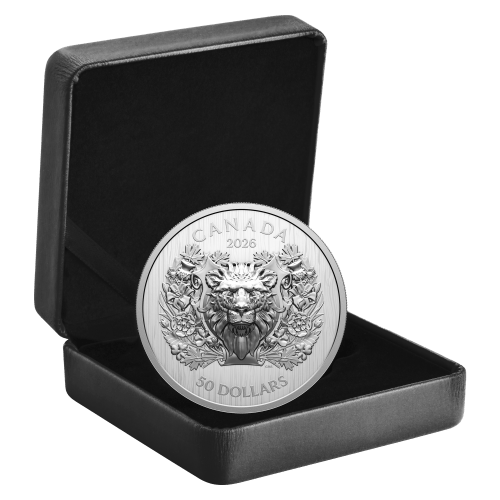
The follow-up to 2025’s Heraldic Bear, this 99.99% pure silver coin presents a different take on the lion found in many official Canadian emblems. Reimagined in a heraldically stylized manner, the stately creature is depicted in a forward-facing pose and sculpted in Extraordinarily High Relief (EHR), while the wreath of floral emblems is engraved in Ultra High Relief (UHR), resulting in differing, eye-catching relief heights.
Enjoy a fresh take on a heraldic creature found in many Canadian emblems.
COIN HIGHLIGHTS
- A Canadian heraldic animal, reimagined and refreshed. This 99.99% pure silver coin offers a fresh twist on emblematic art with its reimagining of one of Canada’s heraldic animals, the lion, which appears in many official Canadian emblems.
- Flora and fauna are represented. This is a rare opportunity—the lion is rarely featured on Canadian coins! Meanwhile, the wreath consists of floral emblems that are also present in the Arms of Canada.
- Renowned artist. Your coin’s heraldically stylized reverse was designed by renowned Canadian heraldic artist Cathy Bursey-Sabourin.
- High relief, high demand. Only 2,000 coins are available worldwide, and the 2025 coin sold out quickly. Don’t wait!
- Includes serialized certificate. The Royal Canadian Mint certifies all of its collector coins.
- No GST/HST.
PACKAGING
Your coin is encapsulated and presented in a black Royal Canadian Mint-branded clamshell with a black beauty box.
NEW COMBINED ENGRAVING TECHNIQUE
Two engraving techniques have been combined to achieve maximum relief on one side of the coin. The lion engraved in Extraordinarily High Relief (EHR) reaches a peak height of 4.3 mm, while the surrounding wreath struck in Ultra High Relief (UHR) is lower but still significantly higher than traditional engraving.
WOODGRAIN FIELD PATTERN
Both sides of the coin feature a woodgrain field pattern that is not just aesthetically pleasing, it also serves as a visual connection to the natural world that has inspired most of Canada’s identifying emblems.
DID YOU KNOW?
Strong and noble, the lion is a common emblem in Canadian heraldry—in fact, it is featured in eight of the 10 provincial arms. You’ll find several lions in the Arms of Canada: in the shield, as a supporter of the shield, and as part of the crest that also appears on the flag of the Governor General.
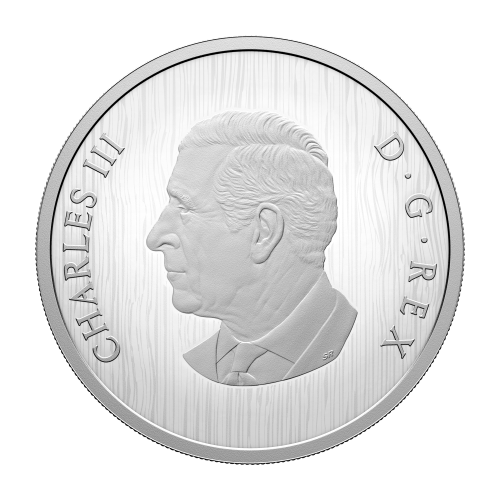
Backed by a woodgrain pattern, the reverse design by Cathy Bursey-Sabourin features a lion depicted in a heraldically stylized manner within a cartouche frame. The lion is presented in a forward-facing pose and engraved in Extraordinarily High Relief (EHR). The surrounding wreath is engraved in Ultra High Relief (UHR) and consists of floral emblems from the Arms of Canada—the Tudor rose of England, the thistle of Scotland, the shamrock of Ireland, the lily of France, and Canada’s maple leaf—along with seed pods, flower buds and maple keys signifying renewal and hope for the future. The woodgrain pattern also appears on the obverse, which features the effigy of His Majesty King Charles III by Canadian artist Steven Rosati.
ABOUT THE ROYAL CANADIAN MINT
The Royal Canadian Mint is known as one of the most reputable mints in the world. The Ottawa Branch of the Royal Mint opened in 1908 and was renamed The Royal Canadian Mint in 1931 when control was transferred to the Canadian government. Their high standards for excellence and quality allowed them to be the first refinery to manufacture 9999 fine gold bullion coins in 1982, as well as the first to reach 99999 fine gold purity in 1998.